
Brief Summary
This video explores the subtle decline of small American towns, focusing on the gradual erosion of their economic and social fabric rather than dramatic collapses. It examines population loss, aging demographics, the closure of essential institutions like schools and hospitals, and the changing nature of available jobs. The video also touches on the paradoxical effects of the vacation economy and remote work, and the challenges faced by a generation of Americans who have left their small towns but now grapple with the difficulties of caring for aging parents from afar. Ultimately, it raises the question of whether this decline is a transition or an ending, and what a dignified response to it might look like.
- Gradual decline of small American towns is happening, not dramatic collapses.
- Population loss and aging demographics are key factors.
- Closure of schools, hospitals, and businesses impacts community stability.
- Changing job market with lower wages affects economic viability.
- Vacation economy and remote work have paradoxical effects.
- A generation grapples with caring for aging parents from afar.
- The question is whether this decline is a transition or an ending.
Introduction: The Stillness of Decline
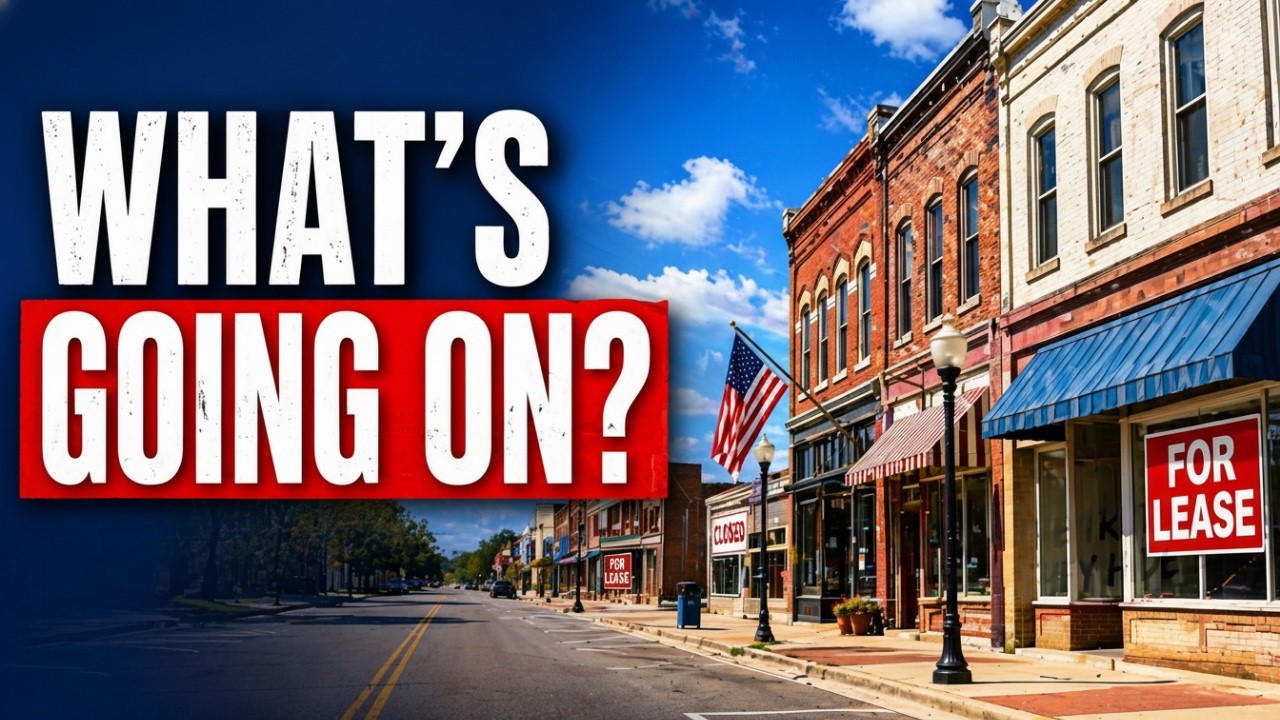
The video starts by describing the quiet, almost imperceptible decline occurring in small American towns. It's not about dramatic collapses or headline-grabbing crises, but a slow, steady erosion of the social and economic fabric. While these towns may appear ordinary from the outside, with flags flying and people going about their daily lives, a closer look reveals a shared story of something slowly disappearing. This pattern is not about towns that failed, but about towns changing in ways that are hard to see and measure from within.
The Mental Image vs. Reality
Every small town holds a mental image of its "best self," often from 20-40 years ago, filled with vibrant main streets and community events. This image was once real, reflecting a time when local economies thrived on residents' needs. However, the arrival of big-box stores like Walmart, the rise of online shopping through Amazon, and bank consolidations disrupted this arrangement. Young people left for college and didn't return, further contributing to the gradual decline. These changes accumulated slowly, like water wearing down stone, leaving many towns carrying the weight of the past within structures built for a different era.
The Age Structure Shift
Population loss in rural America isn't new, but the current situation is different due to the age structure of the remaining population. The departure of 25-35 year olds for education and jobs has long-term consequences that become visible about 20 years later. This includes declining school enrollment, reduced business customers, and emptying church pews as the older population ages without younger replacements. The delayed consequences are now arriving simultaneously across many small towns.
The Impact of School Closures
Declining school enrollment leads to consolidation of grade levels, schools, and eventually, complete closures. This removes a key anchor for families with children, who may then choose to leave the town. The school is not just an educational institution, but a vital component that keeps a particular age group tied to the community. The real estate market suffers as families leave or accelerate their departure plans, leading to a growing inventory of unsold houses.
The Struggles of Local Businesses
Small town businesses, often family-owned for generations, face a shrinking customer base. While previous generations adapted to declining foot traffic, the current generation questions whether the remaining customer base can sustain the business. This isn't about bad management, but about a contracting pool of potential customers. Predictable business closures occur, starting with clothing stores and specialty retailers, followed by sit-down restaurants. Dollar stores and fast-food chains often survive longer due to their lower revenue needs and business models suited for lower density markets. Many businesses simply end when their owners retire without a successor, leaving empty storefronts.
The Significance of Bank Branch Closures
Bank branch closures, while often overlooked, signal a significant downgrade for small towns. The branch provides essential services for elderly residents and small business owners who may not use digital banking. Its physical presence indicates that the financial system considers the town worth serving. When a branch closes, it's a quiet announcement that market conditions no longer justify a physical presence, leading to a sense of decline among residents.
The Paradox of the Vacation Economy
Small town residents often feel that remaining institutions are increasingly oriented towards tourists or newcomers with outside money, rather than year-round residents. In scenic areas, a parallel vacation economy grows, featuring vacation rentals, boutique shops, and restaurants with prices aimed at visitors. This can drive up housing costs and make the town less accessible to long-term residents. While the vacation economy brings money, it can paradoxically lead to a decline in affordability and community for those who have always lived there.
The Health Care Crisis
The health care situation in small town America is a critical issue, with approximately 140 rural hospitals closing since 2010. Many more are financially vulnerable. Hospital closures have immediate and multi-layered effects, including longer travel times for emergency care. The economic impact is significant, as the hospital is often a major employer. Nurses, technicians, and administrative staff move to cities for employment, further impacting the local economy and schools. The loss of a hospital leads to reluctance among new medical providers to practice in the town, resulting in unfilled positions and poorer health outcomes for residents.
The Generation That Left
A generation of Americans who left small towns for economic opportunities now face the challenge of caring for aging parents from afar. The towns they left are no longer viable for their parents due to the thinning of essential services like medical care, grocery stores, and pharmacies. This leads to difficult conversations about moving parents, who resist leaving their homes, communities, and identities. The logistics of late life become increasingly challenging in places where the infrastructure has been quietly removed.
The Complicated Jobs Question
The jobs situation in small town America is often misrepresented. While some claim the jobs are gone due to factory closures, others point to low unemployment rates and "help wanted" signs. The reality is more nuanced. The quality and structure of jobs have changed, with factory jobs replaced by lower-paying distribution center jobs or part-time contract positions. These wages often don't allow residents to buy homes and raise families in their hometowns.
Towns That Are Doing Well vs. Those That Are Not
Small towns that are doing comparatively well often have specific characteristics: proximity to a city, a single large employer, or a successful vacation economy. They may also benefit from remote work relocation. However, many towns lack these advantages and face significant challenges. These towns experience sustained population decline, business closures, and service reductions. Residents experience this through the loss of their pharmacy, hospital, school, and hardware store.
Transition or Ending?
The central question is whether the decline of small towns is a transition or an ending. While some argue that small towns are resilient and have overcome challenges in the past, others believe the current moment is different due to factors like automation, receding remote work trends, and demographic shifts. Some towns have found success through tourism, remote work, or specific niches, but many are past the point where these opportunities can reverse the decline. For these towns, the focus should be on a dignified, supported decline, which requires acknowledging the situation and addressing it directly. The video concludes by emphasizing that the changes in small towns are happening gradually, often unnoticed, but are deeply felt by the people who live there.

