
Brief Summary
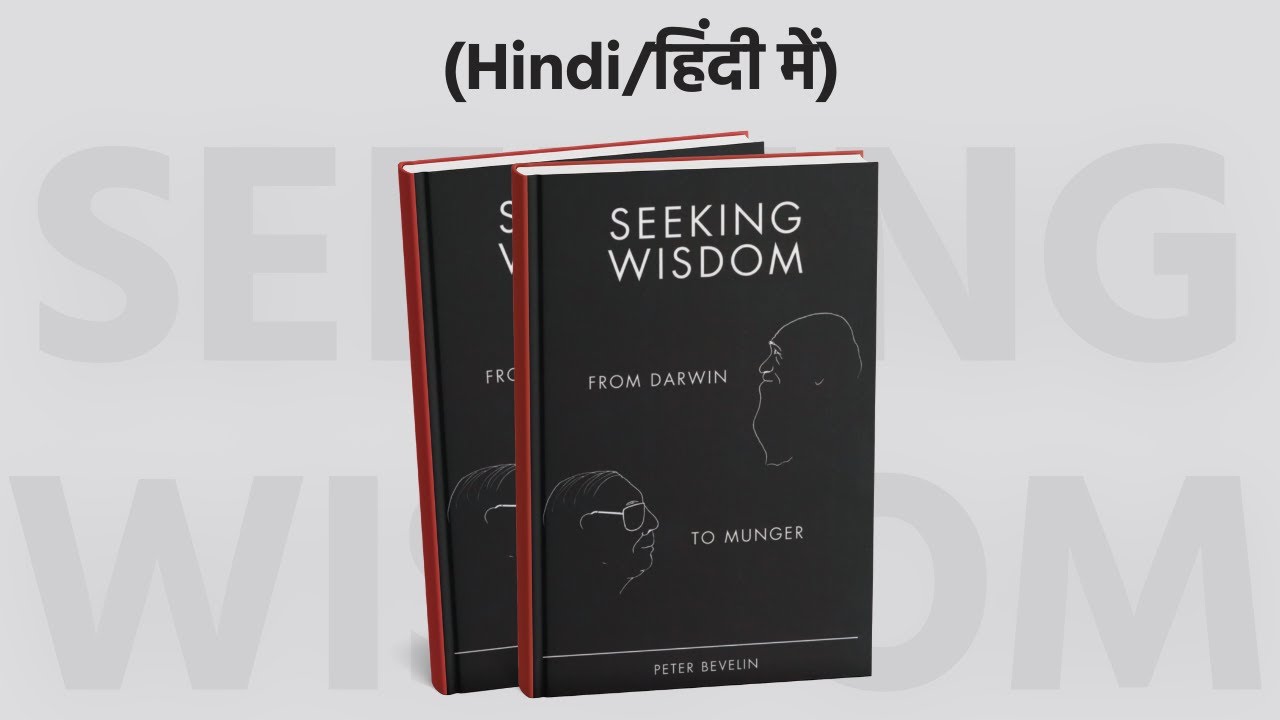
This video summarizes the book "Seeking Wisdom" by Peter Bevelin, which explores how to improve thinking and decision-making by understanding why we make mistakes and learning from the wisdom of great thinkers like Charles Munger, Warren Buffett, and others. The key takeaways include understanding the influence of biology, evolution, and psychology on our behavior, recognizing common mental errors, and adopting mental models to make better decisions and avoid significant pitfalls in life.
- Understanding the influence of biology, evolution, and psychology on our behavior
- Recognizing common mental errors
- Adopting mental models to make better decisions
Introduction: The Quest for Wisdom
The video starts by emphasizing the importance of learning from mistakes and understanding why we behave the way we do. It introduces the book "Seeking Wisdom," which is based on the thinking of Charles Munger, who believes in avoiding paths that lead to failure and misery. The book focuses on how our thinking is influenced, why we make mistakes, and what mental models can improve our thinking. By understanding these influences and adopting a logical framework, we can make better decisions and avoid significant errors. The best way to learn is from others, mastering the best things others have discovered.
The Limits of Our Biology
To understand why we think and make mistakes, it's crucial to understand what controls our behavior. Our physical structure determines our limits; for example, we can't fly because we lack wings. Our anatomy and biochemistry are the foundation of our actions. Experiments show that changing the hardware (brain structure) changes the software (behavior). The prefrontal cortex controls social behavior, while the amygdala controls emotions like fear. Damage to these areas can drastically alter behavior, highlighting that our brain and body are one system, and our thinking is limited by our brain's wiring.
The Wiring of Our Brain
The human brain, weighing about 1.3 kg, contains over 100 billion neurons. The connections between these neurons are crucial. Neurons communicate through chemical neurotransmitters that act like keys opening receptors on other neurons. Dopamine, a reward chemical, gives us pleasure and motivation, while serotonin regulates our mood. Our thoughts and feelings are chemical reactions dependent on how our neurons are connected. This wiring is determined by our genes, life experiences, and environment.
The Role of Genes
Genes are the blueprint of our body, determining traits like eye color and brain structure. They produce proteins, the building blocks of our body and brain chemicals. Humans and chimpanzees share 94% of their DNA, but the difference lies in which genes are activated and where, known as gene expression. Genes work in teams, with most affecting multiple traits depending on when, where, and how they are activated. Interaction is key in biology, with molecules, genes, neurons, and organs communicating and coordinating to make each individual unique.
Flexibility and Environment
The brain is not divided into separate logical and creative parts but works together as a flexible system. Unlike a predictable machine, life is a complex system with multiple ways to achieve the same goal. The brain adapts to changing conditions, with different areas taking over if one is damaged. Genes require environmental cues to function, acting like a bullet needing a trigger. The brain is constantly changing, with new connections forming with each experience, even daily. This explains why identical twins have different brains due to different life experiences.
The Influence of Environment and Situations
No two people have the same upbringing, diet, education, or social circle, leading to different behaviors. Reactions depend on genes, experiences, and the current situation. Our mood affects our decisions, and our thoughts about what is happening matter as much as the events themselves, known as the placebo effect. Conversely, the nocebo effect shows that negative expectations can cause negative outcomes.
Evolution and Our Brain
Evolution, or change over time, is driven by mutation and natural selection. Mutations are random errors in DNA copying that can create new features. Natural selection favors changes that help survival, passing those changes to offspring. Competition, variety, and a changing world are key observations. Traits that increase survival, like increased venom in spiders, become more prevalent. Pleasure and pain drive our actions, with pleasure associated with survival-promoting activities and pain with threats. Loss aversion, the fear of losing something, is stronger than the joy of gaining something.
The Pattern-Recognizing Brain
The brain is not a logical computer but a pattern recognition machine, doing what has worked in the past. Great players focus on the most promising moves, not wasting time on useless ones. The modern human brain evolved in a hunter-gatherer environment, leading to a preference for sweet and fatty foods. Our habits, fears, and decisions are influenced by our hunter-gatherer ancestors.
Self-Interest and Morality
Self-interest is a fundamental human quality, driving us to protect ourselves and our families. Pure altruism cannot evolve because selfish individuals would exploit and eliminate selfless ones. Morality arises from the desire for praise and the avoidance of blame. Groups that cooperate are more successful than selfish ones. Cooperation is beneficial, as illustrated by the Prisoner's Dilemma, where trust and repeated interactions lead to cooperation being the most advantageous strategy.
Fear, Explanations, and Fast Thinking
Fear, an ancient and powerful emotion, helps us avoid danger. It is better to be scared and survive than to be fearless and die. While we no longer face the same threats as our ancestors, our brains still react similarly to public speaking, rejection, or job loss. We seek explanations for everything, preferring certainty over uncertainty. The brain looks for patterns, assuming that if A follows B, A causes B. We are drawn to new things and explore. The brain feels before it thinks, making quick judgments for survival, but this can lead to mistakes in today's complex world.
The Ultimate Goal: Sex and Social Behavior
The primary goal of every organism is to pass on its genes. Humans, like other animals, engage in behaviors to attract mates. Men and women seek different qualities in partners due to the different costs of reproduction. Men seek more partners, while women seek quality partners who can provide resources and protection. We are social animals, and living in groups and maintaining a good reputation were essential for survival. Reciprocity, helping others with the expectation of return, is important. We are more generous when observed and fear being ostracized, which drives us to follow social norms.
Culture, Genes, and Conflicts
Our behavior is shaped by both genes and culture. We are born with the capacity to learn language, but culture determines which language we speak. Culture is a form of evolution, with customs that benefit society surviving. We are born selfish, so generosity must be learned. Our ancient hunter-gatherer brains sometimes conflict with modern culture, leading to unhealthy behaviors like smoking or gambling. We trust faces and expressions, but deceivers can fake honesty.
The Psychology of Human Misjudgment
Smart people fail due to ego, greed, jealousy, and imitation. It's better to have a functional 200-horsepower brain than a 400-horsepower brain wasted on negative emotions. People are easily fooled, and Charles Munger studied the psychology of human errors to avoid losing money and helping loved ones. Our environment influences us, as seen in how luxurious settings can lead to unnecessary purchases. We associate things with good or bad memories, which can affect our judgment.
Incentives and Rewards
People do what they are rewarded for. If you want ants, put sugar on the ground. People repeat actions that are rewarded and avoid those that are punished. The Federal Express story illustrates how changing incentives can solve problems overnight. Rewarding doctors for surgeries can lead to unnecessary procedures, and giving police quotas for fines can lead to unjust ticketing. Incentives should align with desired outcomes.
Self-Deception and Cognitive Biases
We are prone to self-deception, often believing we are above average. Success in the stock market can be attributed to skill when it's just luck. If you only have a hammer, every problem looks like a nail. We need different tools and mental models to find the right solutions. Assume you might be wrong and have a backup plan. Don't trust first impressions; look at past behavior. We don't want to hear the bitter truth and hide from it like ostriches.
Commitment and Consistency Bias
Once we make a commitment or invest time and money, we don't want to change, wanting to appear consistent. Politicians fight losing battles, and people stay in failing businesses or bad relationships. If you realize you're wrong, take a U-turn immediately. Avoid ideologies that blind you to the truth. People love what they are about to lose and will fight to protect their freedom, money, or status.
Loss Aversion and Inaction
If a stock or project is losing money, sell it. Don't wait for the price to recover. Don't try to win back money in gambling or the stock market. If every small problem had to be fixed first, nothing would ever start. We prefer things to stay the same and choose default options to avoid thinking. There's also the syndrome of doing nothing, fearing blame if action leads to failure. However, not deciding is also a decision with potentially high costs.
Envy, Praise, and Influence
Avoid pleasure that leads to pain and embrace pain that leads to pleasure. People will do anything for envy. We are envious of those similar to us. Envy can benefit society by driving people to work harder. Don't compare yourself to others. We listen to those we like, who are similar, attractive, praise us, and cooperate with us. Beware of flattery and consider the motives behind it.
The Importance of Solitude and Avoiding Extremes
All of humanity's problems stem from man's inability to sit quietly in a room alone. CEOs often buy companies out of boredom, not necessity. It's better to do nothing, wait, and look for the right opportunity. Wise people speak because they have something to say; fools speak because they have to say something. Accept your ignorance and say "I don't know." Don't make big decisions when very happy or sad; take a cooling-off period.
Stress, Control, and the Power of Perspective
You can't change the cards you're dealt, but you can decide how to play them. Stress occurs when we feel a loss of control. The more helpless we feel, the more stress increases, leading to short-term decisions like substance abuse or unhealthy eating. Pain, addiction, and illness impair our thinking. Don't make decisions when in pain or under the influence.
Systems Thinking and Unintended Consequences
Our brains are excellent machines with old software bugs. We make mistakes due to emotions, stress, and imitation. Wisdom lies in recognizing and avoiding these bugs. Every action has a reaction, sometimes beyond our expectations. Consider how your actions affect the entire system. Size matters; what works for a small business may not work for a large corporation.
Base Rates and Statistical Thinking
Those who forget history are doomed to repeat it. When someone is caught stealing, consider the base rate: it's unlikely to be their first time. Base rate theory tells us how to update old probabilities with new evidence. Eye witnesses are not always correct. Consider the context of whether an event is common or rare. Don't make big decisions from little data. Extraordinary performance doesn't always last.
Survivorship Bias and Averages
We often look at past records to predict the future, but past records can lie. When many people are involved in something, someone will succeed by chance. Success is not always proof of ability. Look at the losers as well. We often say, "Take risks," seeing successful college dropouts like Mark Zuckerberg, but we don't see the thousands who dropped out and failed. Averages can be deceiving. Look at how things are distributed and consider variability.
Mental Models for Understanding the World
A model is an idea that helps us understand the world. Social proof explains why we copy others when confused. Autocatalysis explains how some reactions accelerate themselves. A multidisciplinary approach is essential. If you only know one subject, you'll see every problem from that perspective. You should know the big ideas from physics, biology, psychology, and math.
Simplicity, Rules, and Opportunity Cost
Simplicity is the ultimate sophistication. Break complex problems into smaller pieces. If a business plan is too complex, it probably won't work. Focus on the most important things, remembering the 80/20 rule. Create firm rules for yourself, such as not doing business with people you don't trust or buying stocks you don't understand. Always ask, "What else could happen?" If Plan A fails, what is Plan B? Think about opportunity costs.
Second-Order Thinking and Quantification
Think about the second and third-level results of every decision. First order: If I smoke a cigarette today, I'll enjoy it. Second order: But it could cause cancer later. Third order: My family will suffer, and expenses will increase. Always think long-term. Try to quantify everything. Instead of saying a project is risky, say it has a 30% chance of failing and will cost $1 million.
Evidence, Backward Thinking, and Risk Management
For extraordinary claims, extraordinary evidence is needed. Don't trust words; demand proof. Look for evidence that disproves your beliefs. Think backward. Instead of thinking about how to succeed, think about how to fail and avoid those things. If you want to be happy, list the things that make you unhappy and eliminate them. Risk is what happens when you don't know what you're doing. Risk can't be eliminated but can be managed.
Attitudes and Perspectives
The right attitude is key to success. Wait for the right opportunity, stick to your rules, and admit your mistakes. Optimistic people live longer and are happier. Do what you love. Working just for money is like saving sex for old age. Be happy if you don't expect anything, because you will never be disappointed. If you always expect the best, you will often be sad.
Iron Prescription and Curiosity
When you feel someone else is ruining your life, realize you are ruining it yourself. Seeing yourself as a victim is the worst habit. Make a rule that no matter how bad the situation, it's your fault, and you will fix it. We often dwell on the past or worry about the future. We never live in the present. Curiosity is the mark of a powerful mind. Be like a child again. Ask "Why?" about every fact.
Conclusion
The book "Seeking Wisdom" can help improve your thinking. We are human, and we can't stop making mistakes, but using these mental models, we can make fewer mistakes and live a better, happier, and wiser life.

