
Brief Summary
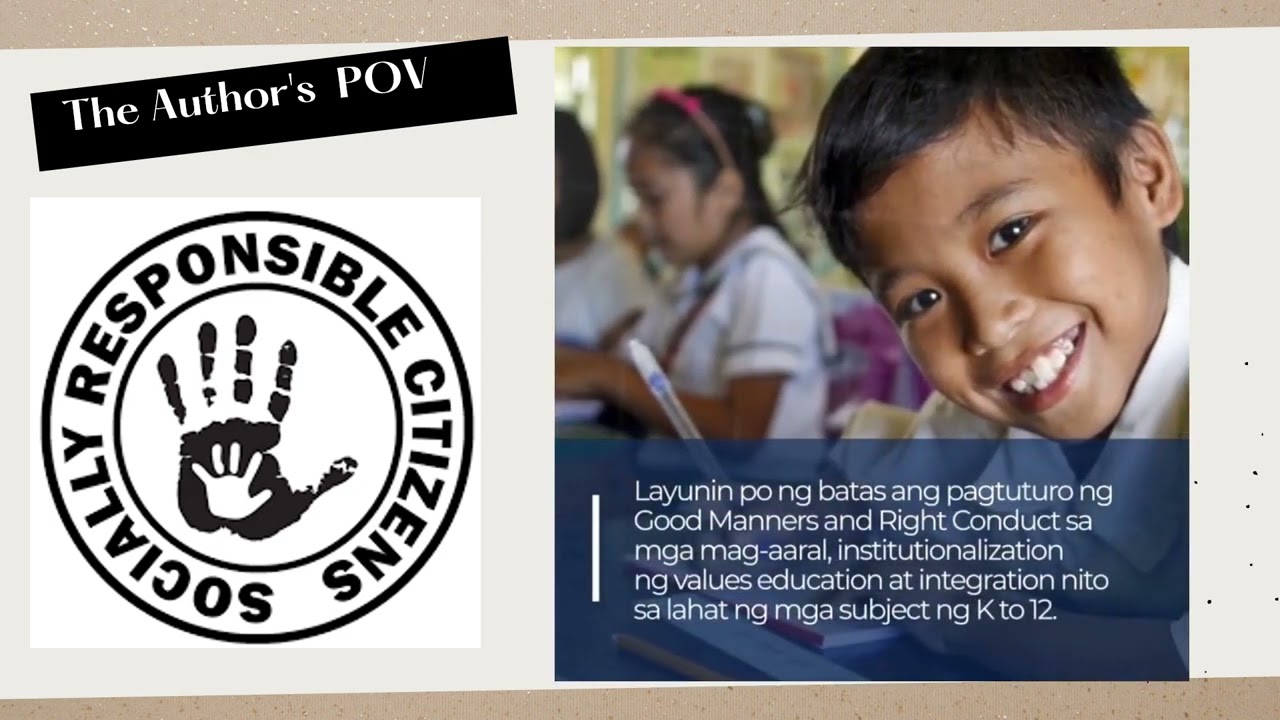
In this video, Maria Cristina Aspecto discusses the recently enacted Republic Act number 1176, which reinstates the teaching of Good Manners and Right Conduct (GMRC) and Values Education in the Philippine educational curriculum. The law aims to instill moral values and discipline in the youth, particularly during a time of technological advancement and changing societal behaviors. Key points include the integration of these subjects from Kindergarten to Senior High School and the role of teachers in cultivating responsible citizens through values education.
- Republic Act number 1176 reinstates GMRC and Values Education.
- The subjects will be integrated from Kindergarten to Senior High School.
Introduction to RA 1176
Maria Cristina opens the discussion by greeting her audience and acknowledging her colleagues in the education sector, particularly Head Teacher Ma'am Tes Mateo and Master Teacher Ma'am Doni Vergara. She expresses gratitude for being given the task to discuss Republic Act number 1176, which focuses on Good Manners and Right Conduct and Values Education.
Importance of GMRC and Values Education
The speaker highlights the significance of the law, which was signed by President Duterte on June 25, 2020. She emphasizes how the reinstatement of GMRC and Values Education will contribute to molding responsible youth. Maria Cristina points out that the subjects have often been neglected or undervalued in the educational system, yet they are essential for teaching important life skills and ethical behavior.
Rationale Behind the Law
Maria Cristina discusses her conversation with Senator Juan Miguel Zubiri, one of the principal authors of the law. They reflect on the declining moral values among today’s youth and the absence of GMRC from the curriculum since its removal in 2013. She mentions the influence of other countries that incorporate similar courses in their educational system, which promote respect and cleanliness among their citizens.
Curriculum Implementation
The integration of GMRC and Values Education into the curriculum will begin from Kindergarten and continue through grades 1 to 10. In Kindergarten, the subject will be part of daily learning activities. From grades 1 to 6, it will be taught as a core subject for 40 minutes each day. In grades 7 to 10, it will transition to Values Education as a core subject, ensuring that moral values are a consistent focus throughout schooling.
Goals and Outcomes
The law aims to promote discipline, respect, and love for the country in today’s youth, who are often referred to as Generation Z. Value education is essential to developing responsible citizens who can contribute positively to society. The speaker highlights the urgent need for such education in a time when technology and cultural shifts challenge traditional values.
Teacher Responsibilities and Challenges
Maria Cristina addresses the heightened responsibilities that teachers will have under this new law. They are expected to deliver sessions that enable students to internalize values and demonstrate good behavior in real-life situations. This includes various educational methods, such as storytelling, to convey positive and negative life lessons.
Preparation and Professional Development
The speaker concludes by noting the challenges teachers will face in adapting to the new curriculum and the need for continued professional development. Teachers are encouraged to pursue further education in Values Education or attend relevant training to enrich their teaching methods. Ultimately, embodying the values taught is crucial for teachers to effectively impart knowledge to their students.

