
Brief Summary
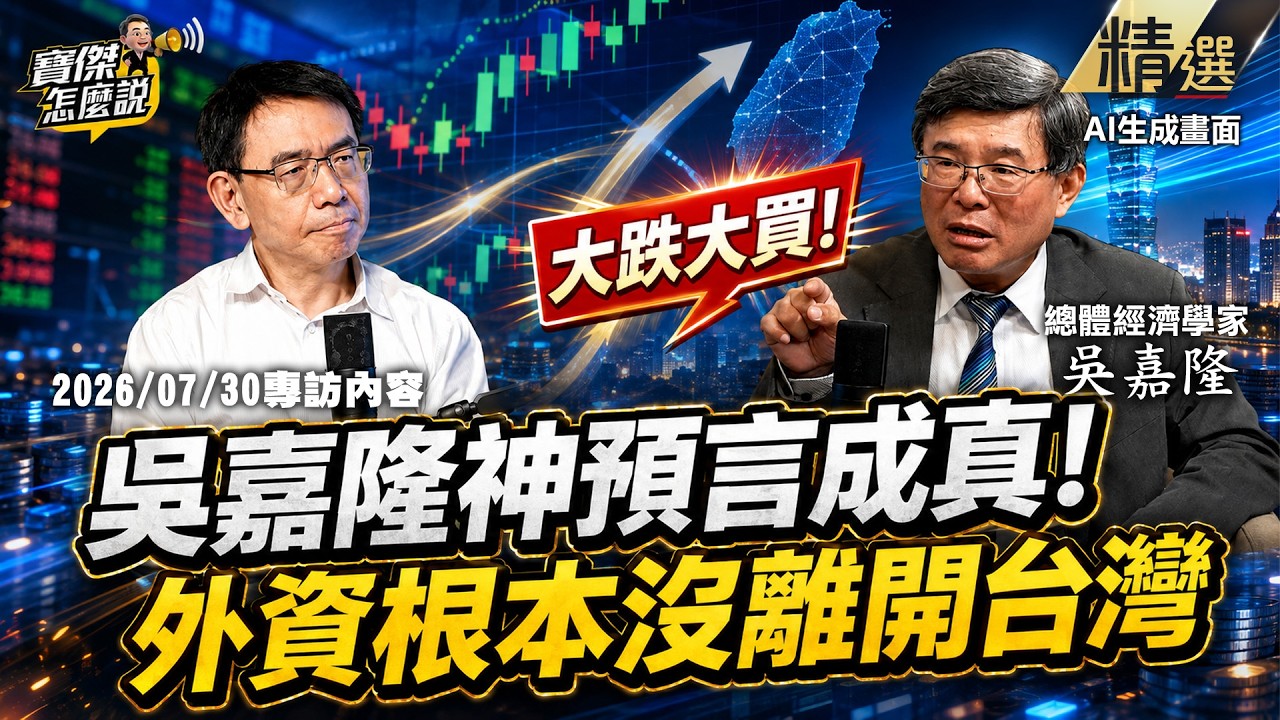
This video discusses the interplay between international capital, Taiwan's stock market, and the implications of the AI revolution on Taiwan's economic future. The speaker emphasizes Taiwan's essential role in the global AI supply chain and reflects on recent shifts in U.S. foreign policy toward Taiwan amid its strategic significance in the "non-red supply chain." As investments flow towards the U.S. for AI-led growth, the dynamics of Taiwan's economic position and its long-term prospects are addressed, with a focus on major players like TSMC and the competitive landscape with firms like Samsung and Intel.
- International capital is heavily invested in Taiwan, propelled by its AI supply chain.
- The U.S. is re-evaluating relations with Taiwan, establishing its role as a leader in alternatives to the Chinese supply chain.
- Taiwan is witnessing a capital reversal, with significant investment flowing from foreign entities into its industries.
- TSMC maintains a competitive edge due to high profit margins and strategic investments in AI technology.
International Capital and Taiwan's Stock Market: Why Foreign Investment Can't Leave Taiwan
This chapter highlights the current state of international capital in Taiwan, particularly under the backdrop of the AI revolution. The speaker explains that foreign capital's recent sell-off in Taiwanese stocks is a strategy to clear high-leverage amounts in the market. As nations enhance their computational capacities for AI, Taiwan's robust semiconductor supply chain becomes integral, leaving long-term international investors with limited alternatives.
U.S. "Awakening" in Foreign Policy: How Taiwan Became a Leader in the Non-Red Supply Chain
In this segment, the speaker discusses the shift in U.S. foreign policy regarding China. The U.S. has recognized the failures of past globalization efforts that supported China's rise and is now positioning Taiwan as a key player in the non-red supply chain. Various U.S. states are setting up investment offices in Taiwan for multifaceted cooperation in sectors including semiconductors, AI servers, and biotechnology, underscoring the strategic and economic ties between Taiwan and the United States.
Reversal of Capital Flow: How U.S.-Taiwan Mutual Investment Creates Global Hegemony
This chapter elucidates the trend of capital outflow from Taiwan to China over the past thirty years, which contributed to China's manufacturing prosperity. However, there is now a significant pivot toward the U.S. to shape the next AI industry framework. The "mutual investment" clause in U.S.-Taiwan trade agreements is fostering robust and complementary partnerships in cutting-edge sectors such as drones and heavy power, effectively enhancing Taiwan's global influence and interdependence.
Winning by Outpacing Competitors: TSMC's High Margins and Long-Term Faith in AI Trends
This chapter focuses on TSMC's ability to maintain high profit margins amid high costs of overseas manufacturing. The speaker highlights TSMC’s advanced packaging and technological strengths that enable price pass-through and premium capabilities, successfully pressuring competitors like Samsung and Intel. By drawing parallels with past technological revolutions, the speaker underscores that any adjustment in AI industry stock prices during its early stages presents crucial buying opportunities.

