
Brief Summary
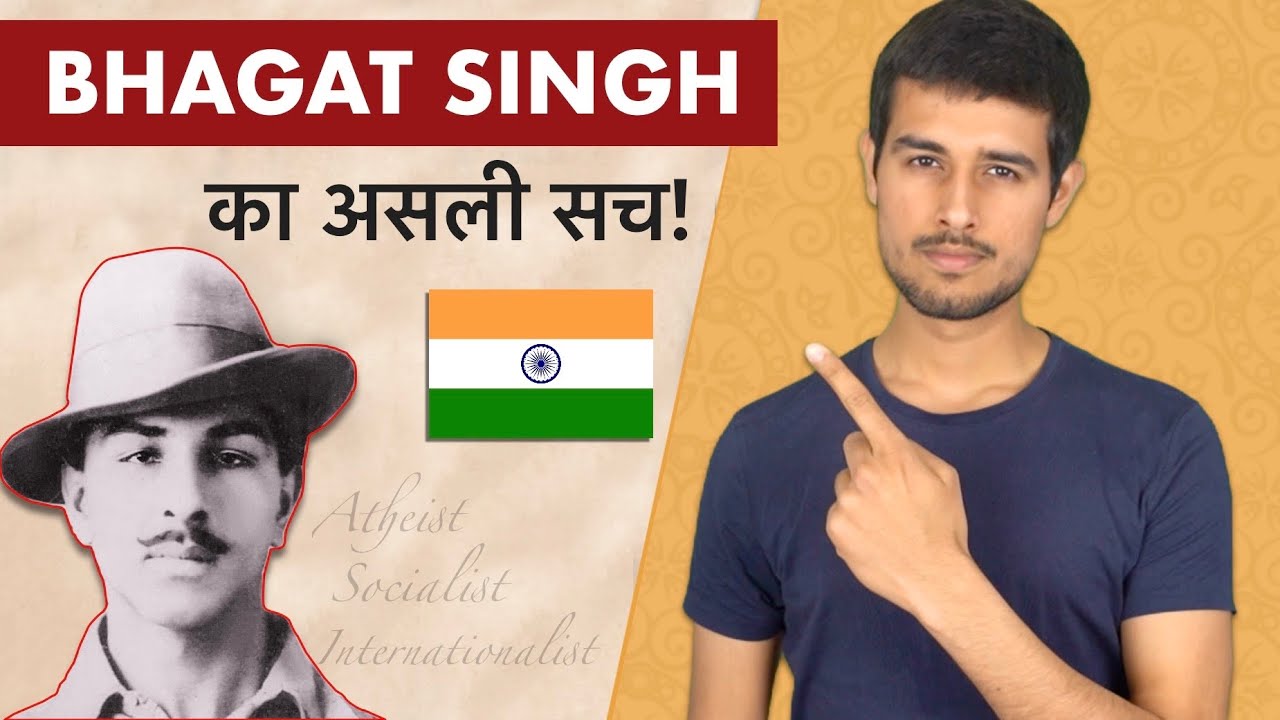
The video focuses on the life and ideologies of Bhagat Singh, highlighting his role as an intellectual and his belief in socialism, atheism, and internationalism. It critiques the popular misconceptions about Singh, portraying him as a fighter against systemic exploitation rather than merely a violent rebel. Key points include:
- Bhagat Singh was a voracious reader and a thinker who valued ideas over violence.
- His commitment to socialism stemmed from a desire for social justice for the downtrodden.
- He championed internationalism, emphasizing global unity over nationalism.
- Bhagat Singh identified as an atheist, advocating for a secular society devoid of religious influence in governance.
Intro
The video begins by commemorating the martyrdom of Bhagat Singh and his comrades, Rajguru and Sukhdev, on March 23, 1931. The speaker expresses the need to understand Bhagat Singh beyond his image as a freedom fighter associated with violence, pointing out that many idolize him without grasping his philosophies or values.
Intellectualist
Bhagat Singh is described as a profound intellectual of his time, known for his extensive reading and writing. He was influenced by a wide array of literature and penned articles in various magazines. Contrary to popular belief, Singh believed that true revolution stemmed from thought rather than weapons, emphasizing the importance of understanding ideas in the struggle for freedom.
Socialist Revolutionary
The focus shifts to Singh’s socialism, shaped by the works of Karl Marx and Lenin. He was distressed by the exploitation faced by farmers and laborers and believed that mere political change would not suffice for true social justice. Singh's dedication to the downtrodden is evident in his writings and speeches, where he stresses that exploitation exists regardless of who is in power and that the fight must continue until the rights of the oppressed are upheld.
Internationalist
Singh's ideology of internationalism is presented, showcasing his vision of a world united without borders. He envisioned a day when nations would collaborate rather than conflict. He criticized extreme nationalism and jingoism, advocating instead for global fraternity, as he believed that humanity should function as one family, free from animosity and division.
Secular Atheist
The video elaborates on Singh's views on secularism and atheism. While other leaders promoted a version of secularism that ensures impartiality among religions, Singh advocated for a clear separation of government from religion. He viewed religion as a personal matter and criticized the violence stemming from religious beliefs. Singh's approach towards atheism is underscored through his questioning of God in the context of social injustice, stressing that reformative justice is essential for societal progress.
Conclusion
The conclusion reiterates the importance of understanding Bhagat Singh's ideologies in-depth, rather than just idolizing his image. The speaker urges viewers to appreciate his values and to actively work towards halting exploitation, encapsulating the essence of Singh’s message in a call to action: "Long Live the Revolution."

