
Brief Summary
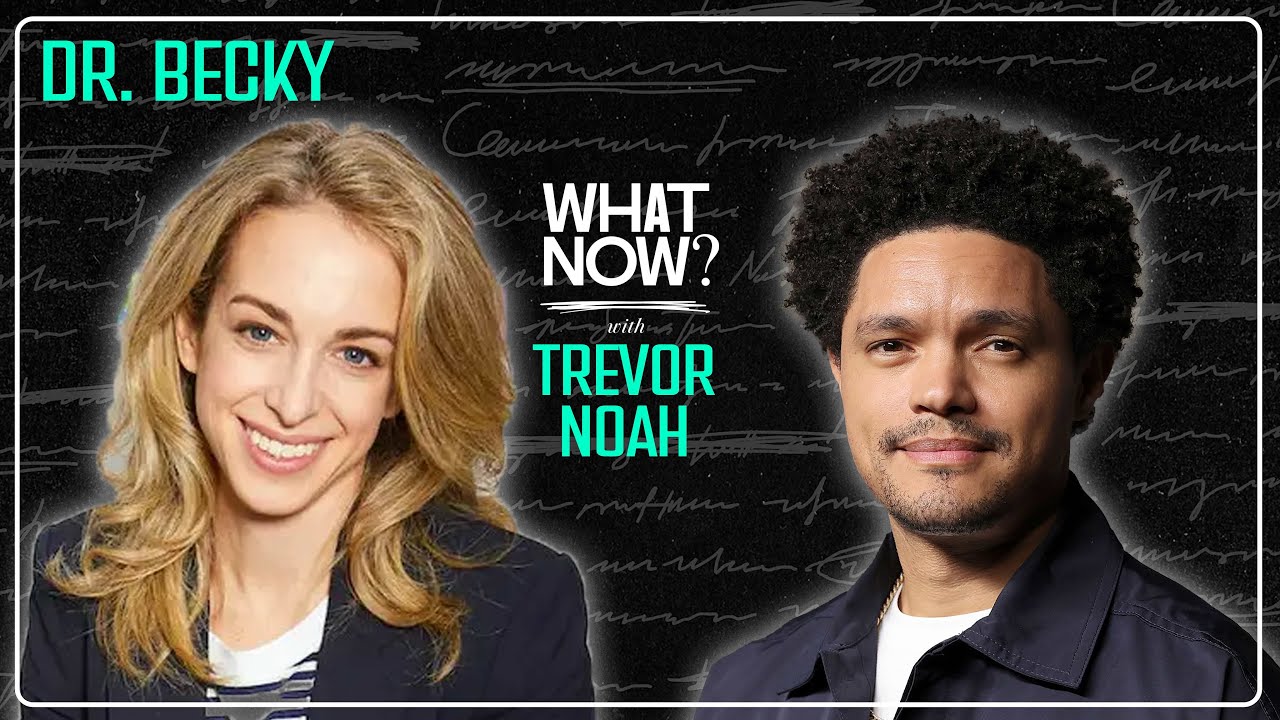
Trevor Noah interviews Dr. Becky Kennedy ("Dr. Becky"), a clinical psychologist known as the "Millennial Parent Whisperer", about her "Good Inside" parenting philosophy. They discuss the challenges of modern parenting, the importance of understanding a child's inner goodness, and practical strategies for managing difficult behaviours. Dr. Becky emphasises the need for parents to heal themselves, separate a child's identity from their behaviour, and foster curiosity and compassion. The conversation explores the impact of childhood experiences on adult relationships and the significance of repair in building strong connections.
- Parenting is hard and stressful, affecting both parents and children.
- Children are inherently good, and bad behaviour is often a sign of unmet needs or lacking skills.
- Parents should focus on validation and setting boundaries, fostering a safe environment for children to express their feelings.
- Repairing relationships after mistakes is crucial for building trust and resilience.
- Understanding and addressing parental shame is essential for effective parenting.
Parenting stress is overwhelming half of parents
The Surgeon General has found that nearly half of parents find their stress overwhelming most days, which affects their children. Dr. Becky's "Good Inside" philosophy believes parenting is a skill to be learned, not something innate. Dr. Becky, a clinical psychologist, offers videos and podcasts on topics from tantrums to "mum rage", with a large social media following. She believes both parents and children are inherently good.
Dr. Becky says parenting is a full-time job
Dr. Becky emphasises that parenting is a demanding, full-time job that requires effort and learning. She believes that parenting isn't something you're supposed to just know, but rather something you can learn.
Who is Dr. Becky, the Millennial Parent Whisperer
Dr. Becky Kennedy, also known as "Dr. Becky," is a clinical psychologist and popular figure known as the "Millennial Parent Whisperer." She creates videos and podcasts addressing various parenting challenges, from tantrums to "mum rage," and has amassed a large following across social media platforms. Her core belief is that both parents and children are inherently good.
Trevor asks what she is truly trying to change
Trevor asks Dr. Becky about her purpose behind "Good Inside" parenting, aiming to foster healthier relationships between parents and children. Dr. Becky believes parenting offers a unique opportunity for personal growth and healing while raising better humans. Her goal is to help children grow and parents heal simultaneously.
Helping kids grow while parents heal themselves
Dr. Becky believes parenting allows for both personal growth and raising well-adjusted children. She aims to help children grow while enabling parents to heal unresolved issues from their own childhoods. She highlights that parenting presents an opportunity for personal development as it confronts individuals with their own unaddressed childhood experiences.
Kids do not need perfect parents, they need repair
Dr. Becky acknowledges that she isn't a "Dr. Becky person" as a mum and doesn't wish that on anyone. She emphasises that children don't need perfect parents, but parents who take responsibility for their actions and repair relationships after mistakes. She admits to having moments of losing her temper, especially when she hasn't taken care of herself.
Who you think you are vs who you were told you are
Trevor and Dr. Becky discuss the conflict between self-perception and the labels imposed by others, particularly parents. Trevor reflects on how labels like "naughty kid" were assigned to him and internalised, even if they didn't align with his self-image.
Parents as mirrors and how identity is formed
Dr. Becky explains that parents act as mirrors, reflecting back to their children who they are. Children form their identities based on these reflections. She warns against creating binaries between siblings, such as labelling one as "generous" and the other as "selfish," as this can negatively shape a child's self-perception.
Are kids born with personality
Dr. Becky confirms that children are born with predetermined temperaments and personalities. She shares an anecdote about her middle child's early preferences and behaviours, highlighting how these traits persisted and shaped her personality.
The match between temperament and environment
Dr. Becky explains that a child's personality is formed by the interaction between their innate temperament and their environment. She discusses how the match between a child's temperament and the parent's ability to provide a supportive environment influences their development.
Your kid is a good kid having a hard time
Dr. Becky introduces the phrase "You're a good kid having a hard time," which separates identity from behaviour. This phrase is foundational to her philosophy and helps parents see their child's behaviour as a temporary struggle rather than a reflection of their inherent character. She explains that when children are seen as their behaviour, they become the enemy, hindering positive interaction.
The collapse of curiosity
Dr. Becky introduces the concept of the "collapse of curiosity," where we stop being curious about others' behaviour and jump to negative conclusions. She argues that curiosity is essential for understanding and improving behaviour. She uses the example of a child's tantrum in a grocery store to illustrate how curiosity can lead to more effective and compassionate responses.
Wanting something is not wrong, coping is the skill
Dr. Becky emphasises that wanting things is not wrong, but developing the ability to cope with not having them is a crucial skill. She suggests practicing this skill with children through simple exercises, like waiting for a desired toy.
Why parents say they have no time, and why they actually do
Dr. Becky addresses the common parental complaint of "not having time" for skill-building exercises. She argues that the time spent managing tantrums and reacting to behaviour problems actually exceeds the time required for proactive skill development. She suggests that many helpful interactions can take as little as 90 seconds.
The 90 second reset after a meltdown
Dr. Becky provides an example of a 90-second reset after a meltdown. She advises against lecturing or teaching immediately after the incident. Instead, she suggests starting with curiosity the next day, identifying the missing skill, and sharing a personal story to reduce shame.
Storytelling reduces shame instantly
Dr. Becky explains that sharing personal stories of struggle reduces shame and makes children feel less alone. She advises against immediately relating the story back to the child's behaviour, allowing them to absorb the lesson without feeling targeted.
Preparing kids for hard moments by removing surprise
Dr. Becky suggests preparing children for difficult moments by removing the element of surprise. She recommends simple phrases like, "I wonder what it's going to be like at Target today," to mentally prepare them for potential challenges. This approach is also effective for adults facing difficult situations.
Parenting or conditioning, birth order and identity
Trevor questions whether parenting is about advice and modelling or conditioning. Dr. Becky discusses birth order and sibling dynamics, explaining that roles within a family system can shape a child's identity and behaviour. She explains that in any system, there's only 100% of equality to go around.
Why we choose the partners we choose
Trevor and Dr. Becky explore how childhood attachment patterns influence the choice of romantic partners. Dr. Becky suggests that people are often attracted to what feels familiar, even if it's chaotic or unhealthy. She explains that attraction is more about familiarity than anything else.
Childhood as the slingshot into adulthood
Dr. Becky and Trevor discuss how childhood experiences serve as a "slingshot" into adulthood, shaping behaviour and relationships. They emphasise the importance of repairing nervous systems.
Bad behavior is just feelings bigger than skills
Dr. Becky defines bad behaviour as "feelings bigger than skills." She emphasises that the solution is to level up skills, not punish feelings.
A parent’s two jobs, boundaries and validation
Dr. Becky defines a parent's two main jobs as setting boundaries and providing validation. Boundaries are limits set for a child's safety and long-term benefit. Validation involves acknowledging and accepting a child's feelings, even when they are negative. She explains that tantrums are when feelings are greater than skills.
Parenting Black children and safety in the real world
Trevor raises the issue of parenting Black children, particularly the need to keep them safe in a world where they may face prejudice and discrimination. Dr. Becky suggests that parents should acknowledge the unfairness of the world while consistently treating their children fairly.
Overprotecting kids creates fragility
Dr. Becky warns against overprotecting children, as it can create fragility and anxiety. She emphasises the importance of allowing children to experience a range of emotions and develop coping skills.
Shame, aloneness, and the nervous system
Dr. Becky explains that shame is linked to aloneness and can trigger the nervous system's threat response. She discusses how children learn to suppress or express feelings based on whether they feel allowed to have them.
Separation anxiety and the power of reassurance
Dr. Becky highlights the importance of reassurance in managing separation anxiety. She emphasises that consistency and truthfulness are crucial, as false reassurance can erode trust.
How to handle lying without destroying trust
Dr. Becky discusses how to handle lying without destroying trust. She advises against asking questions when you already know the answer and emphasises the importance of understanding why a child is lying.
The puzzle story, kids do not lie out of disrespect
Dr. Becky shares a personal story about her son lying about destroying a puzzle. She explains that children don't lie out of disrespect but to protect themselves and preserve attachment. She emphasises the importance of creating a safe environment for children to tell the truth.
The truth sets you free for kids and parents
Dr. Becky emphasises that truthfulness is essential for both children and parents. She explains that acknowledging inconsistencies and validating feelings can foster trust and connection.
Repair as the most important skill in relationships
Dr. Becky identifies repair as the ultimate relationship strategy. She explains that it involves taking ownership of behaviour and offering reconnection. She highlights that repair is more important than perfection.
What happens to kids when parents do not repair
Dr. Becky explains that when parents don't repair, children develop coping mechanisms like self-doubt and self-blame. These mechanisms can have long-term negative consequences on their mental health and relationships.
Kids internalize blame to stay attached
Dr. Becky explains that children internalise blame to maintain attachment with their parents. She quotes a Fairburn quote, "For a kid, it's better to be a sinner in a world ruled by God than to live in a world ruled by the devil."
Why parents repeat patterns they hate
Dr. Becky explains that parents often repeat patterns they hate because of unaddressed issues from their own childhoods. She emphasises the importance of self-repair before attempting to repair with a child.
Parenting without community is almost impossible
Trevor and Dr. Becky discuss the importance of community in parenting. They note that the isolation of modern nuclear families can lead to increased shame and difficulty in seeking support.
Shame shapes adult behavior more than we realize
Dr. Becky explains that shame, rooted in the fear of disconnection, profoundly shapes adult behaviour. She highlights that shame can lead to both shutting down and explosive reactions.
Kids carry their parents’ shame too
Dr. Becky explains that children can carry their parents' shame, leading to a sense of isolation and fear. She emphasises the importance of parents acknowledging their own imperfections and struggles.
Lying is often a bid for attachment
Dr. Becky reiterates that lying is often a bid for attachment, an attempt to preserve connection with a parent. She advises against accusatory questions and emphasises the importance of understanding the underlying reasons for a child's dishonesty.
Kids want one thing, to know they are not alone
Dr. Becky emphasises that children primarily want to know they are not alone in their experiences. She highlights the power of sharing personal stories to create connection and reduce shame.
Why compassion feels dangerous for adults
Dr. Becky explains that compassion can feel dangerous for adults because it's often a new and unfamiliar experience. She encourages parents to be more generous in their interpretations of their children's behaviour.
Parents must remember they are good inside too
Dr. Becky concludes by emphasising the importance of parents recognising their own inner goodness. She believes that intergenerational change starts with parents changing their interaction with themselves.
Closing thoughts, a repaired world starts at home
Trevor thanks Dr. Becky for her work, emphasising that a better world starts with the hugs, recognition, repair, trust, and reassurance that everyone deserves.

